

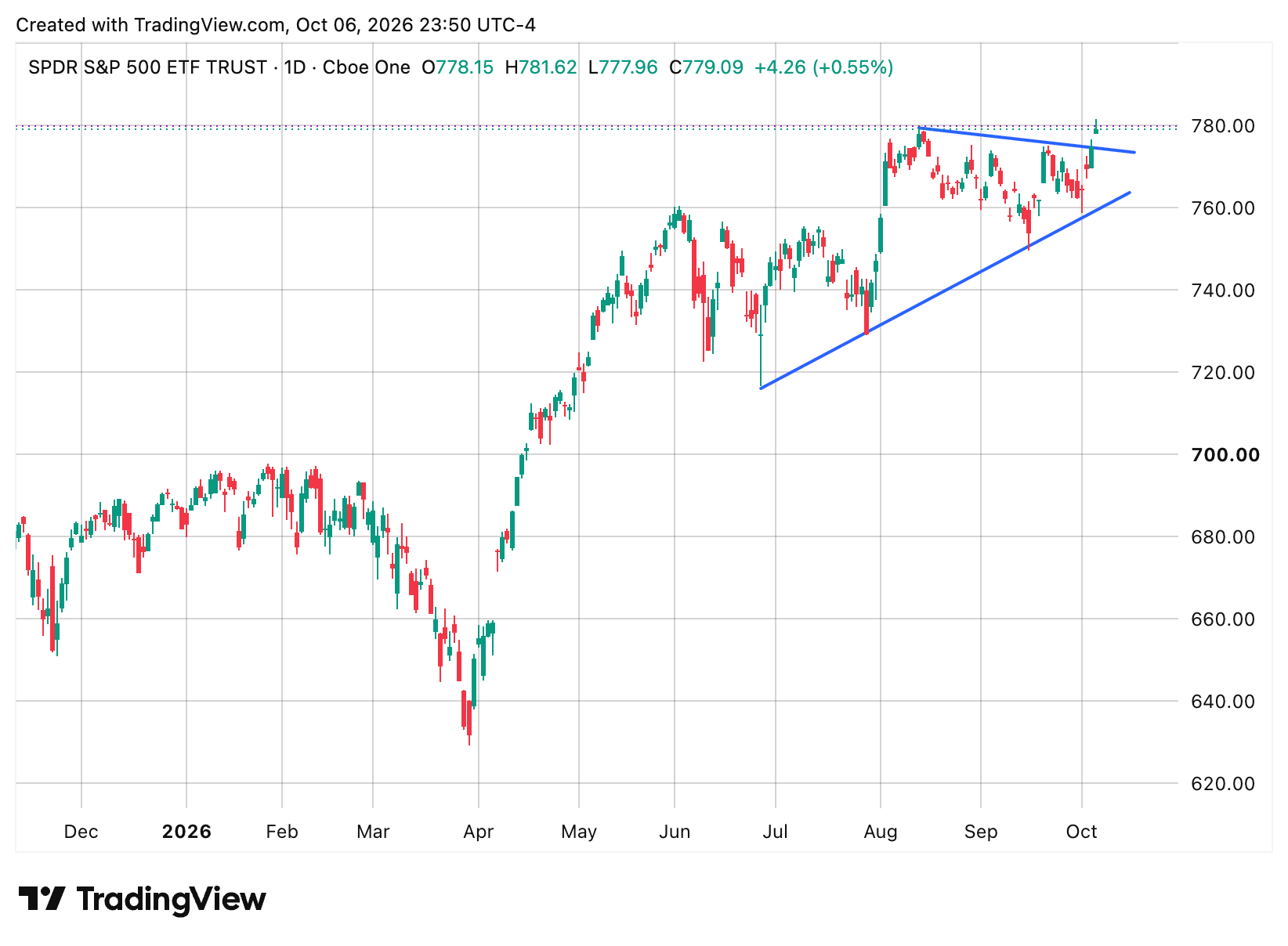
It’s officially October and the S&P500 just hit a new all-time high. Are markets going to continue climbing, or are we sleep walking into a disaster. What history says to expect for stocks and crypto in Q4 of a midterm year. Let’s dive in…
Stocks:
As I wrote last month, September during midterm years is historically the weakest month of the year. While it ended up closing just slightly red, it was an extremely volatile month. However, that trend changes dramatically once the calendar flips to October. These next two months (October and November) are historically the strongest months of the entire midterm year, and it’s not even close.
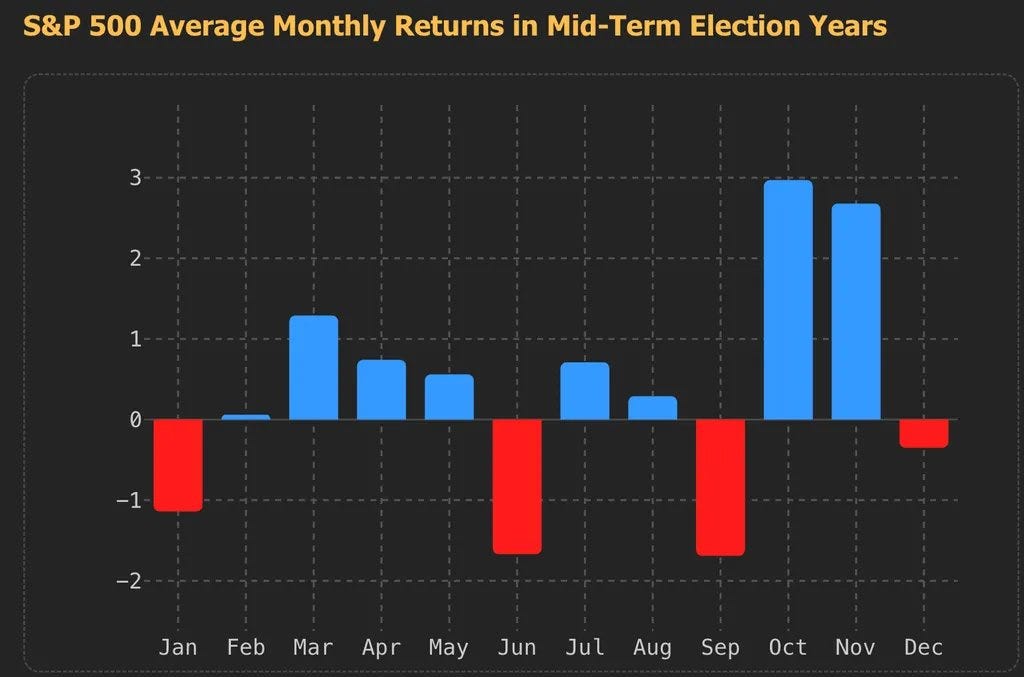
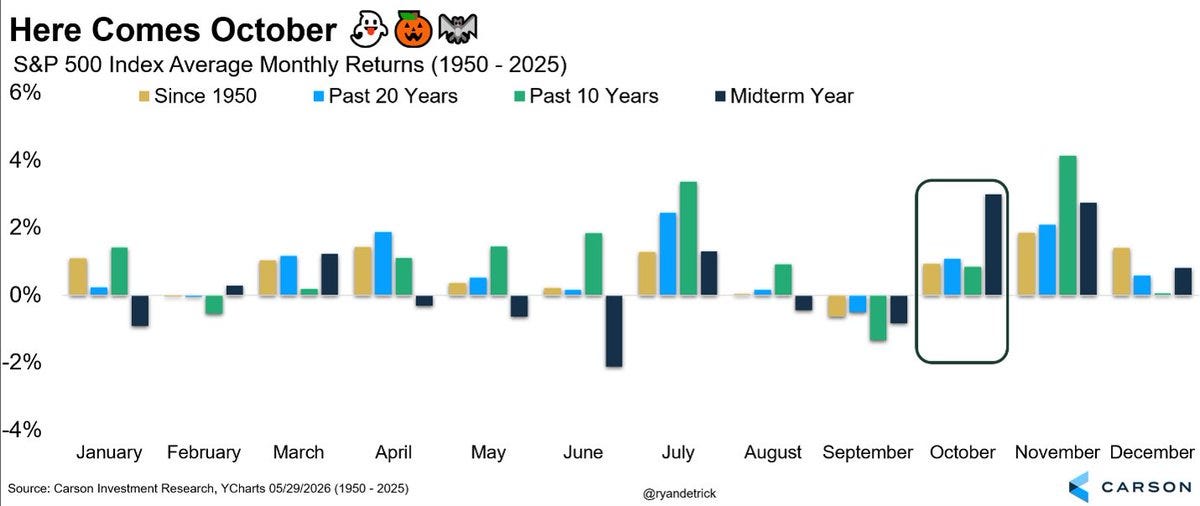
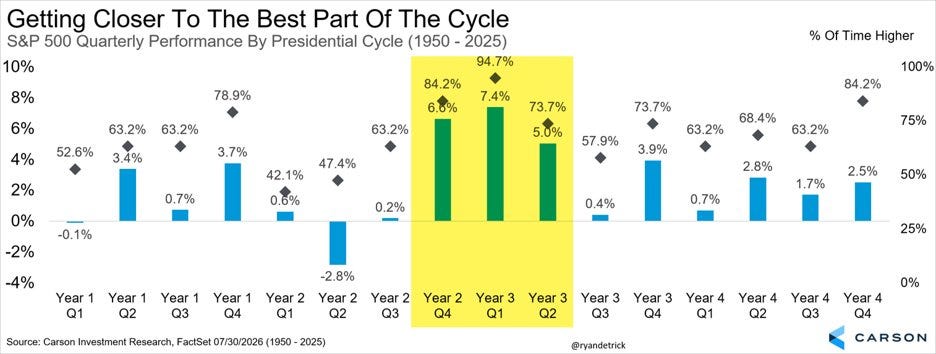
When looking at the full 4-year presidential cycle, we are now entering the most bullish period. Q4 of year 2 (midterm year) and Q1 + Q2 of year 3 are by far the strongest quarters of stock performance throughout all 4 years.
In fact, the S&P500 has seen an average Q4 gain of about 6.6% in midterm years since 1950. That’s almost double the average 3.4% gain in all non-midterm years.
If we pull up a 1-year chart of the S&P500, we just had a nice breakout to new all-time highs after 2-3 months of chopping sideways. Looks like a bullish Q4 setup.
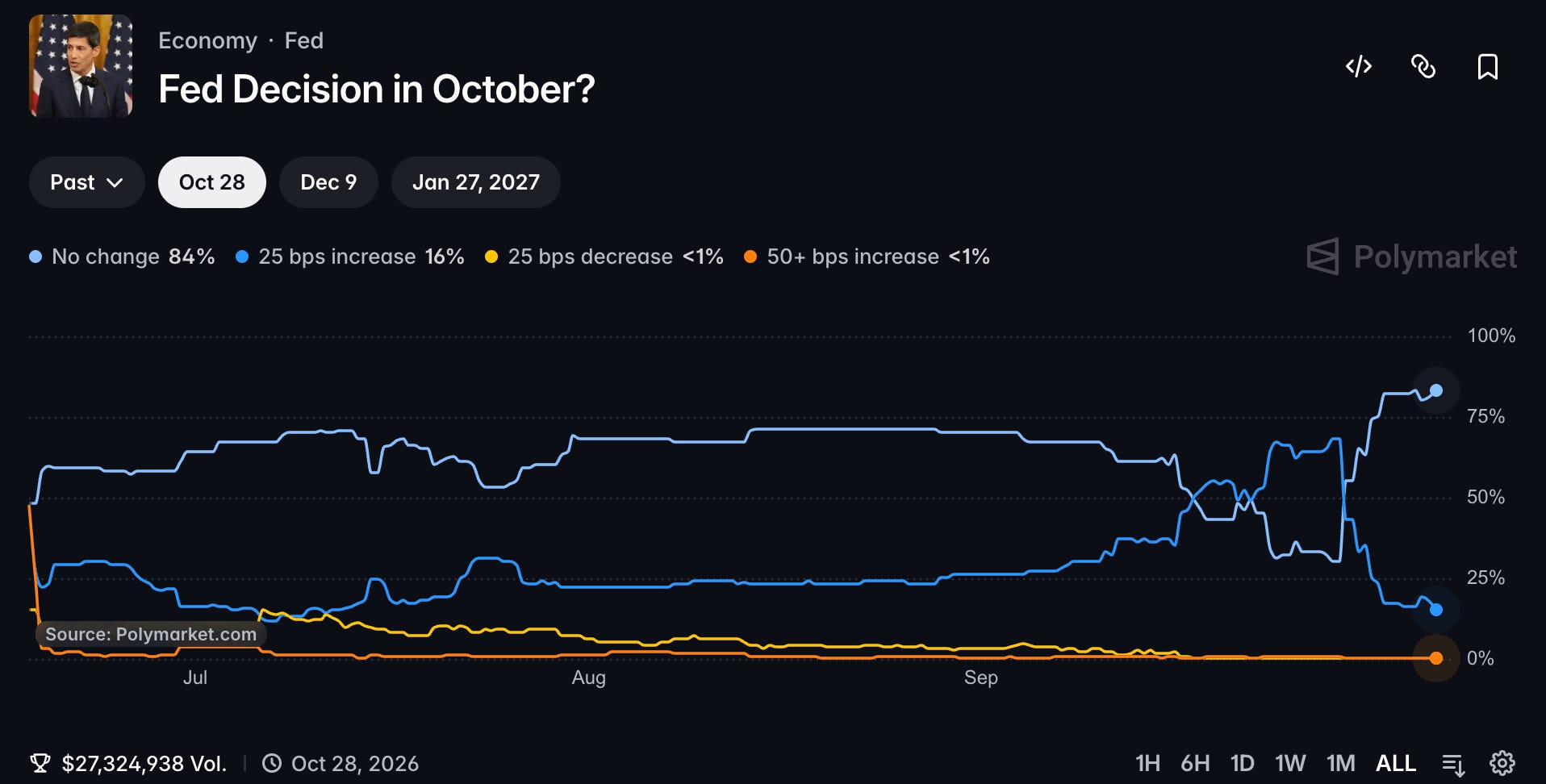
On top of this incredible seasonality, we have two major factors that could contribute to a very bullish Q4. First, the market was previously pricing in and preparing for another rate hike at the October FOMC meeting, with another set to follow in December. It’s now clear that we may be getting a hold instead. Multiple Fed speakers have walked back their hawkish tone and suggested that the Fed has more time to be patient with a "wait-and-see" approach. Polymarket now has the odds of another rate hike this month at just ~16%.
Plus, as I’ve said for almost a year now, the Democrats are an absolute lock to win the House on November 3rd. Regardless of how the Senate turns out (I will have a full midterm prediction post later this month), there is nothing markets love more than divided government. With Democrats in control of the House, it means even more gridlock in Washington, DC. In another word… stability. Trump and the Republicans won’t be able to pass whatever they want on their own. Markets love this stability and gridlock. It means less policy shock and business as usual.
Bitcoin:
For those who may not know, crypto guys often refer to the month of October as "Uptober". This is because of Bitcoin’s incredible seasonality and performance around the end of the year. Q4, and specifically October, is historically a very strong period for Bitcoin. Looking at the last decade, October is by far Bitcoin’s best and most consistent month. It has been positive in 9 of the last 11 Octobers, with an average gain of +19.2%.
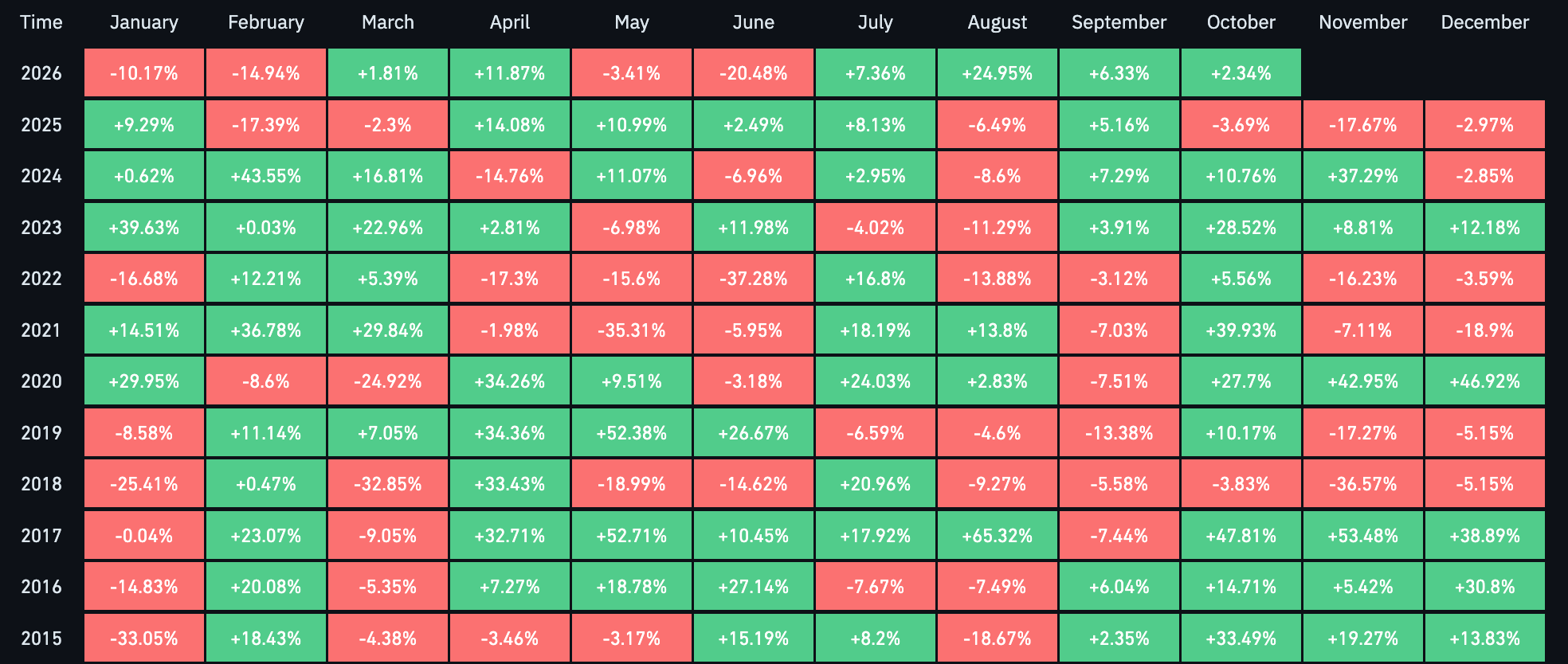
However, if you look at Bitcoin’s Q4 performance during it’s previous three midterm years… it’s not great.
2014: -18%
2018: -44%
2022: -15%
Positive 0/3 midterm Q4s. Average loss of -26%. This obviously throws some cold water on the typical Uptober/Q4 thesis. Yet, this would be completely normal and follow Bitcoin’s cycle perfectly. A lot of people could be caught offsides.
Q4 2013 peak → Q4 2014 bottom
Q4 2017 peak → Q4 2018 bottom
Q4 2021 peak → Q4 2022 bottom
Q4 2025 peak → Q4 2026 bottom???
A weak Q4 with a ~30% pullback would repeat the four-year pattern, bottoming ~18 months after the April 2024 halving and ~12 months after the cycle peak in Q4 2025. Of course, it’s possible that Bitcoin already put in the cycle bottom this summer a few months earlier than usual. I just want to remind you that history does indeed point to a Q4 bottom.
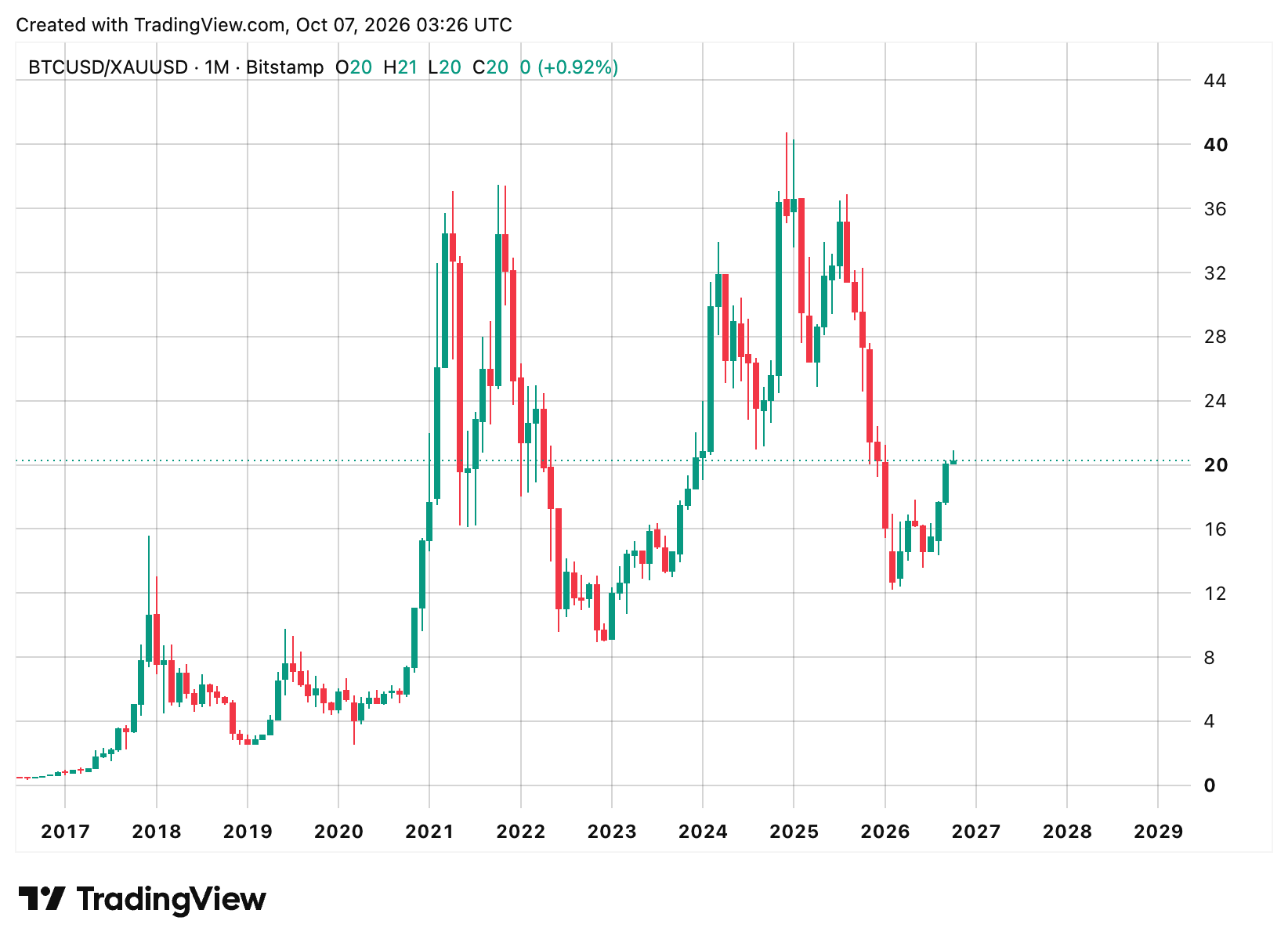
Now, whether it bottomed in July or will pull back again in Q4, when looking at Bitcoin in Gold terms it’s hard not to be bullish long-term. As we move into 2027 and the new bitcoin cycle progresses, I expect BTC/XAU to climb sharply. (Unless some AI cryptography advancement kills the entire crypto industry first)
As we know, the Trump administration has now fully committed to running the economy hot and I believe we have entered an era of Fiscal Dominance. Hard assets will continue to thrive in the coming years as the dollar and global fiat currencies are printed and debased. Inflation is still running above the Fed’s target with no sign of returning to 2% in any meaningful fashion. As more and more people become aware of the persistent inflation and currency debasement, the significance of holding hard assets like real estate, stocks, gold and bitcoin will only grow.
2018 Midterm Scenario:
Before you start piling into TQQQ and 5x leveraged Bitcoin perps, there is another possibility that most people are not pricing in at all and I find myself leaning towards…
A repeat of Q4 2018.
Let’s do a quick recap of what happened then:
October: The S&P 500 declined ~7% as rising treasury yields and hawkish Fed expectations contributed to a sharp drop in equities and market sentiment.
November: The midterms produced an immediate relief rally. Democrats gained 41 House seats and would act as a major check on the Trump administration.
December: The relief rally didn’t last long. The Fed hiked again in December and projected more hikes into 2019. Global trade tensions were high. Political noise picked up post-midterms with threats of a government shutdown and partisan investigations. The S&P 500 fell ~9% in December and reached its 2018 low on Christmas Eve, briefly entering a bear market.
Anything sound familiar?
Overall, the S&P 500 fell ~14% during Q4 2018 despite the historically bullish midterm seasonality. I’m not saying this scenario will definitely play out, but the similarities to 2018 are too big to ignore, and we should be prepared. Political seasonality becomes much less reliable when yields and macro conditions are pushing in the opposite direction.
Summary:
The Pros/Cons of the Q4 ahead of us…
Pros:
Strong market seasonality in October and November
Less Fed rate hikes than initially projected
The Bitcoin cycle putting in a confirmed bottom
Democrats take the House and divided government
Cons:
Surging bond yields
Sticky inflation and possibility of more hikes in 2027
Very narrow equity-market leadership in AI
Oil + energy prices still high
Political turmoil post-midterms
Possible re-escalation of the Iran War
Midterm seasonality remains a meaningful tailwind as we enter Q4, but it’s not ironclad. 2018 proved that even the most bullish seasonality and a positive election outcome can be overpowered by rising bond yields, shifting Fed policy and economic tension. While I am holding my long-term core positions, I think it’s a good idea to consider trimming non-core positions and raising some cash here until we see some of these major threats subside. Be careful out there and let’s have a great Q4. 🤝
P.S. - I will have my full midterm prediction article up towards the end of this month. Subscribe below:
As always, this is not financial advice. I am sharing my personal views. It is meant to stimulate ideas and is not investment advice. Make your own decisions.
I want to be bullish going into November but I will be holding on to my oil stocks. In the same way it became increasingly clear back in January that Trump would attack Iran, I think all the signs are that he will attack again after the mid-terms, whatever the results. He wants his legacy to be that he destroyed the Iranian regime that has heaped nearly fifty years of misery on the region and been a pian in the side to the USA. Any thoughts?
The midterm-year seasonality is striking, but what stands out to me is your point that the market had been pricing hikes the Fed now seems to be walking back. Seasonality tells you the odds, not the outcome, so I'd want to see whether hot energy-driven CPI prints force that hawkish repricing back in. This is why I keep a simple rule close when the calendar looks this favorable: https://paretoinvestor.substack.com/p/the-best-financial-quote-of-all-time